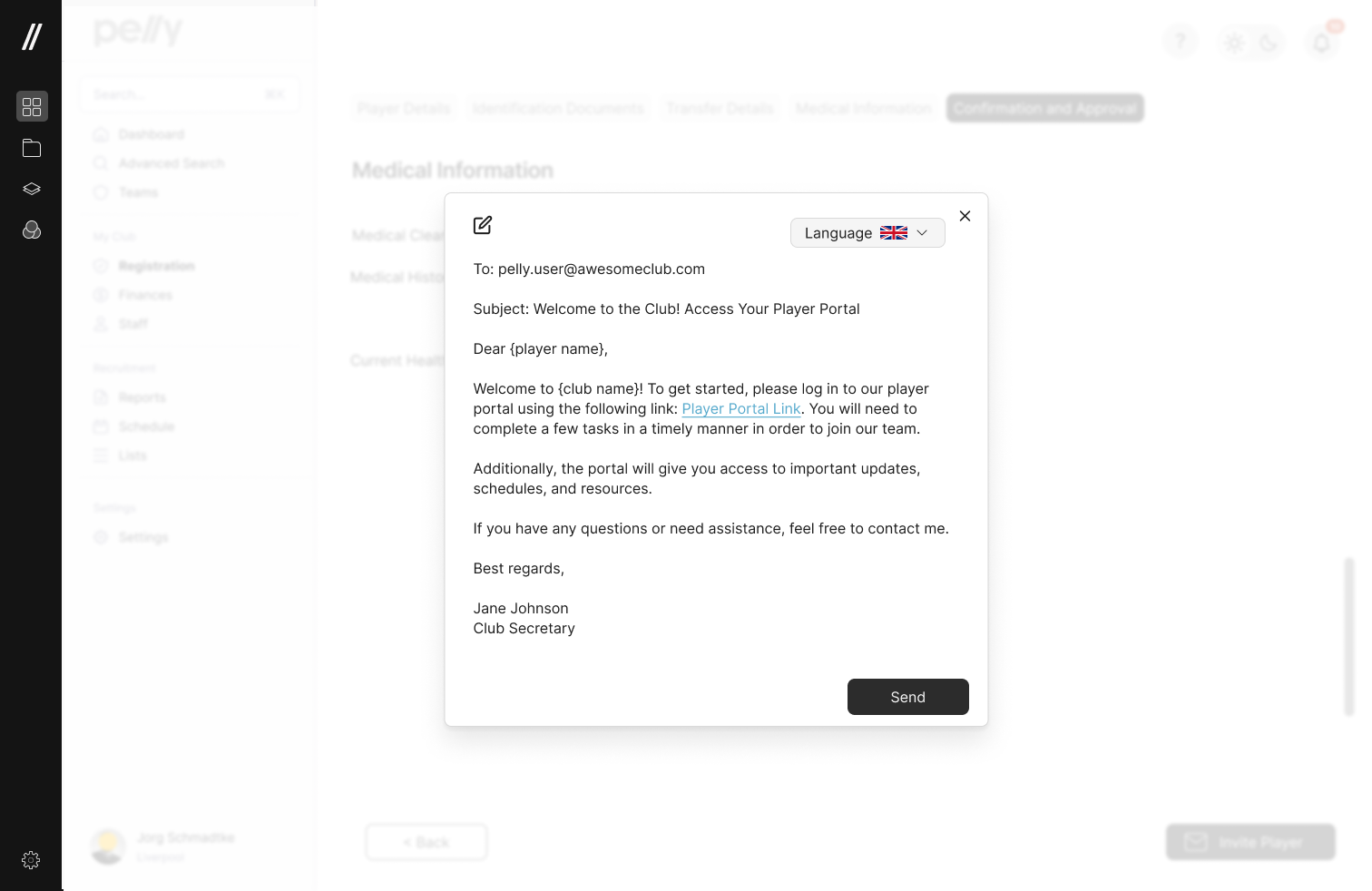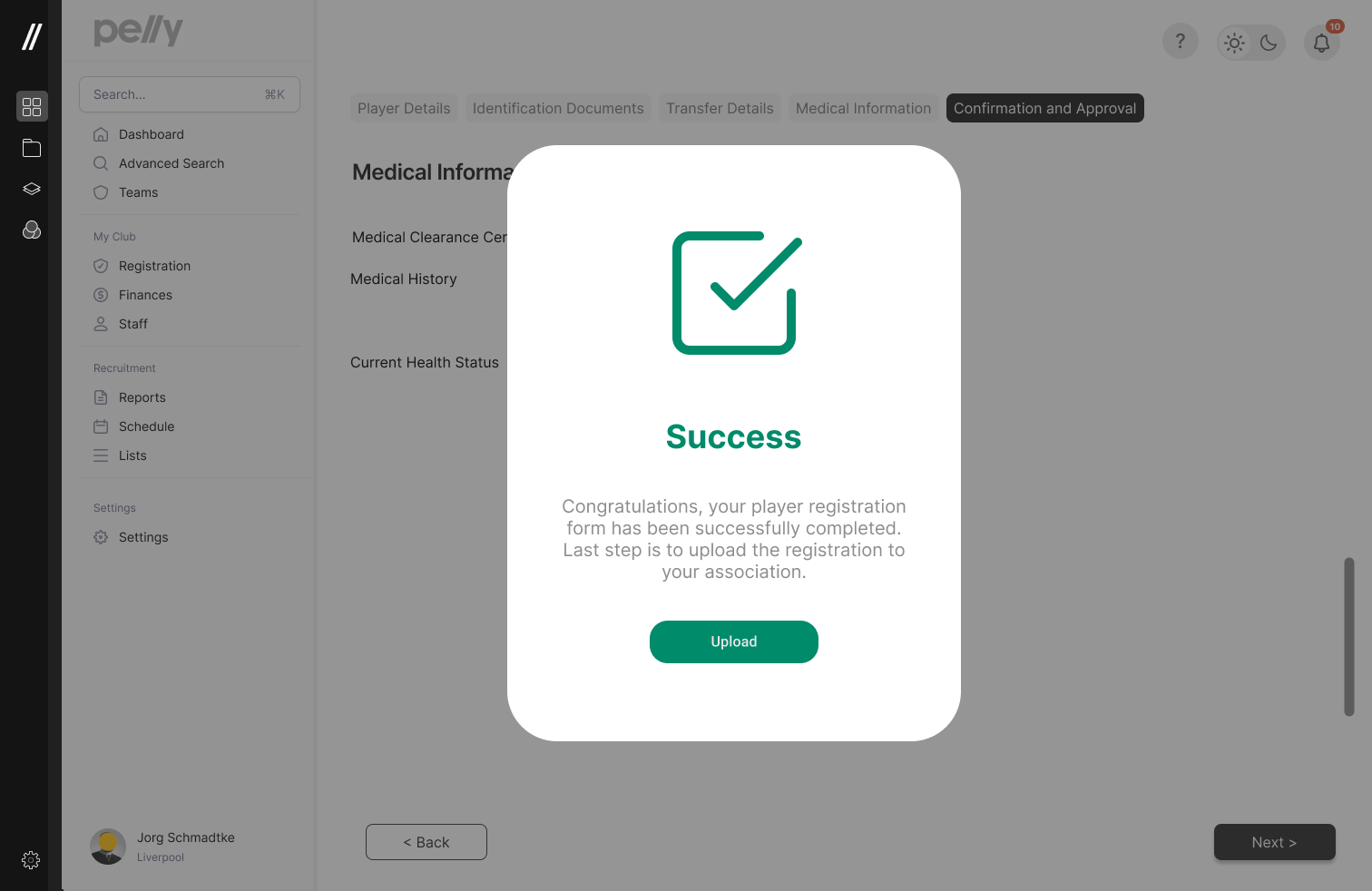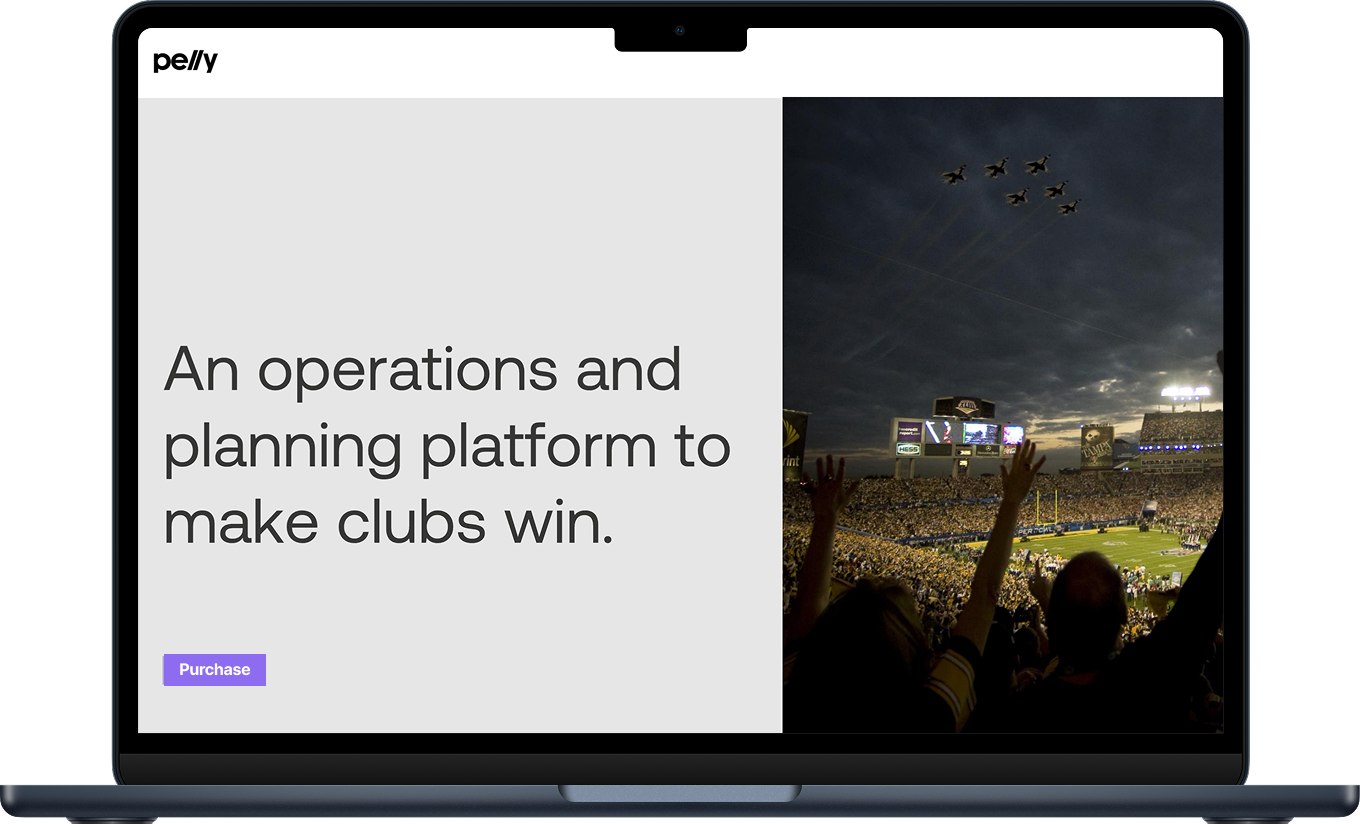
The Pelly project aims to create a user-friendly SaaS platform tailored for mid-level professional football clubs, specifically targeting the Welsh Cymru Premier League.
The platform seeks to address the inefficiencies and complexities of the existing administrative system, COMET, by simplifying administrative tasks, reducing the likelihood of errors, and enhancing overall efficiency in managing off-field operations.
I was involved in all the steps of this project with a main focus on research, prototyping and testing. This was a real client project I was part of during my Human Computer Interaction Master's program at Tufts University in Boston, USA.
“A lot of clubs have been deducted points this year because they’ve registered a player incorrectly. This can have a massive impact on getting into a certain level. You could lose three points because of an admin thing, and you’ve done nothing wrong as a club.”
Head Coach, CYMRU League Footbal Club
The current administrative system used by Welsh Premier clubs, particularly the COMET platform, is overly complex and not user-friendly. This complexity leads to frequent administrative errors, which result in sanctions and operational inefficiencies for the clubs. To address these issues, a new feature, "Pelly for Federations," needed to be designed in order to reduce the likelihood of administrative errors, and enhance overall efficiency in managing off-field operations.
The project goal was to develop a prototype for a checklist-like feature that will help Club Secretaries with the player registration process. The feature will interface with COMET which is currently is the designated system for reporting to the FAW. This will enable Club Secretaries to register users without having to directly interact with COMET.
COMET is the current administrative platform used by Welsh league clubs for managing player registration, transfers and team logistics. We focused on analyzing tutorials and user guides of COMET shared with club officials on the FAW’s support website. Our goal was to evaluate the platform’s strengths and weaknesses, specifically in the player registration workflow. Through this analysis, we identified several key areas where the existing platform falls short.
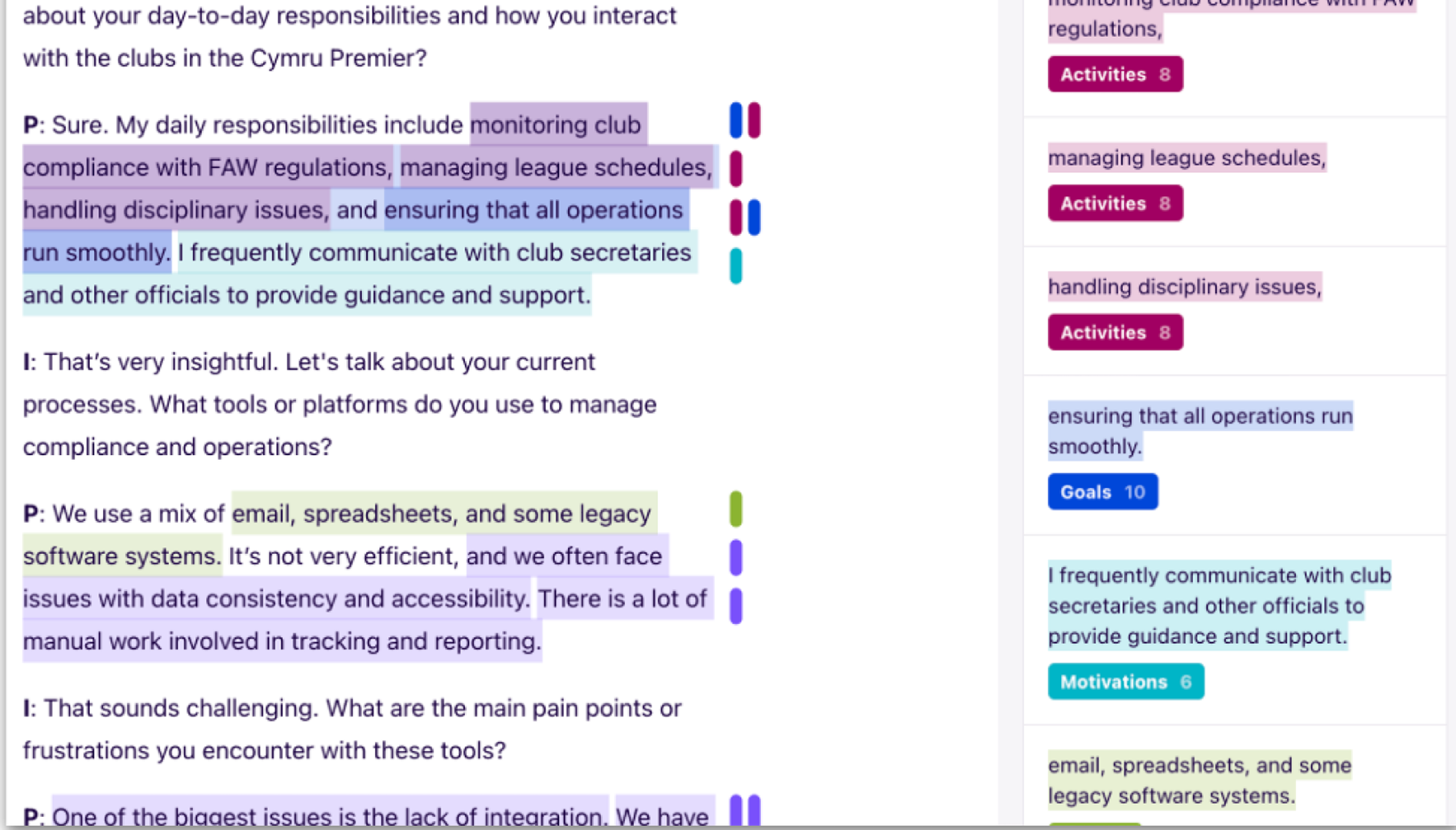
We interviewed users to understand their pain points and needs and used
Dovetail to conduct the analysis. Some of the user needs we identified were:
- Automated compliance monitoring to ensure adherence to FAW regulations and avoid penalties.
- High-level summaries and collaborative dashboards for efficient oversight and decision-making.
- Comprehensive and customizable reporting to provide deep insights and facilitate decision-making
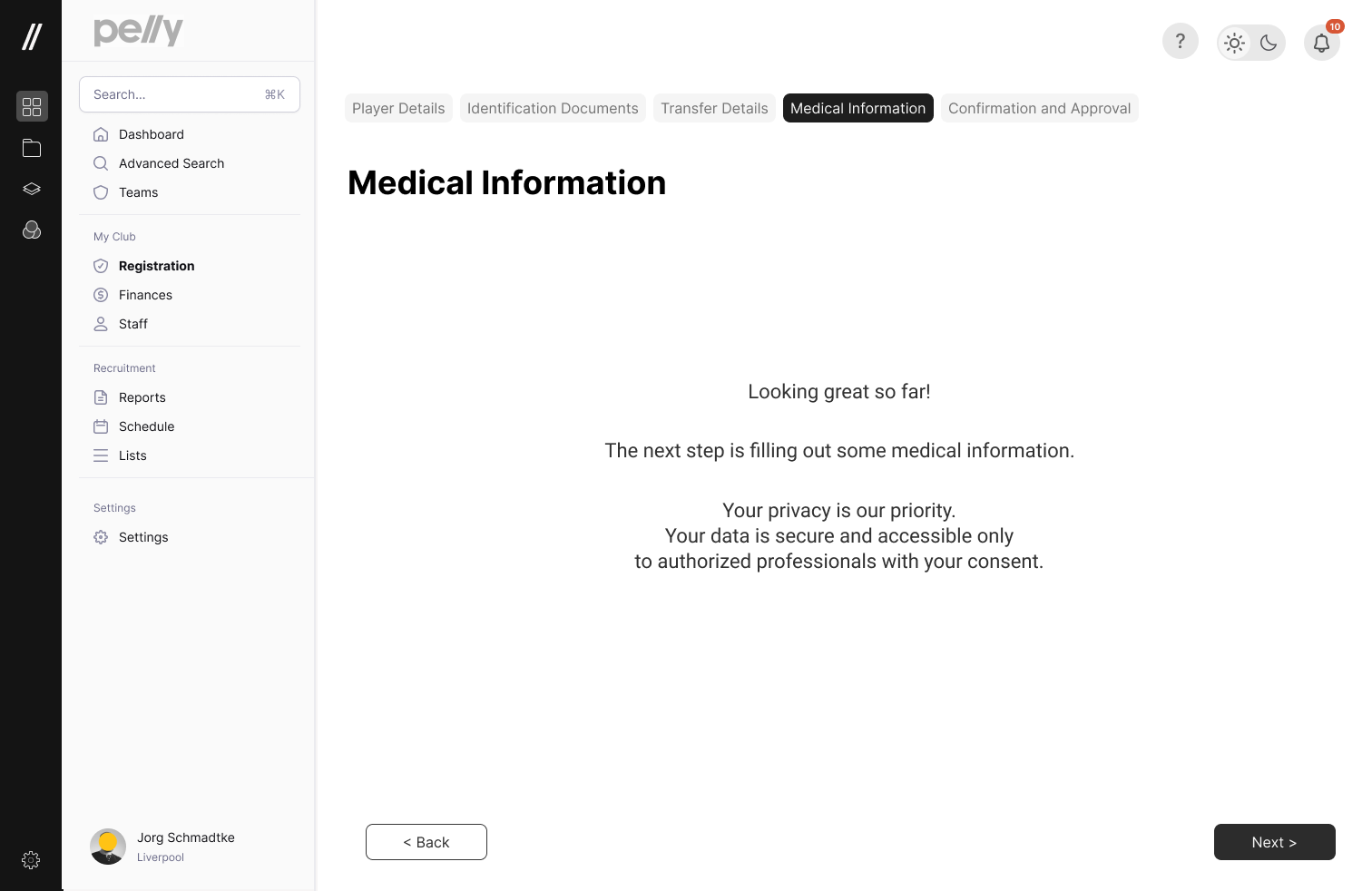
This is the initial storyboarding in order to sketch out the player registration flow that a club secretary would go through. From there we did initial wireframe sketches and completed a preliminary linear task analysis/site map.
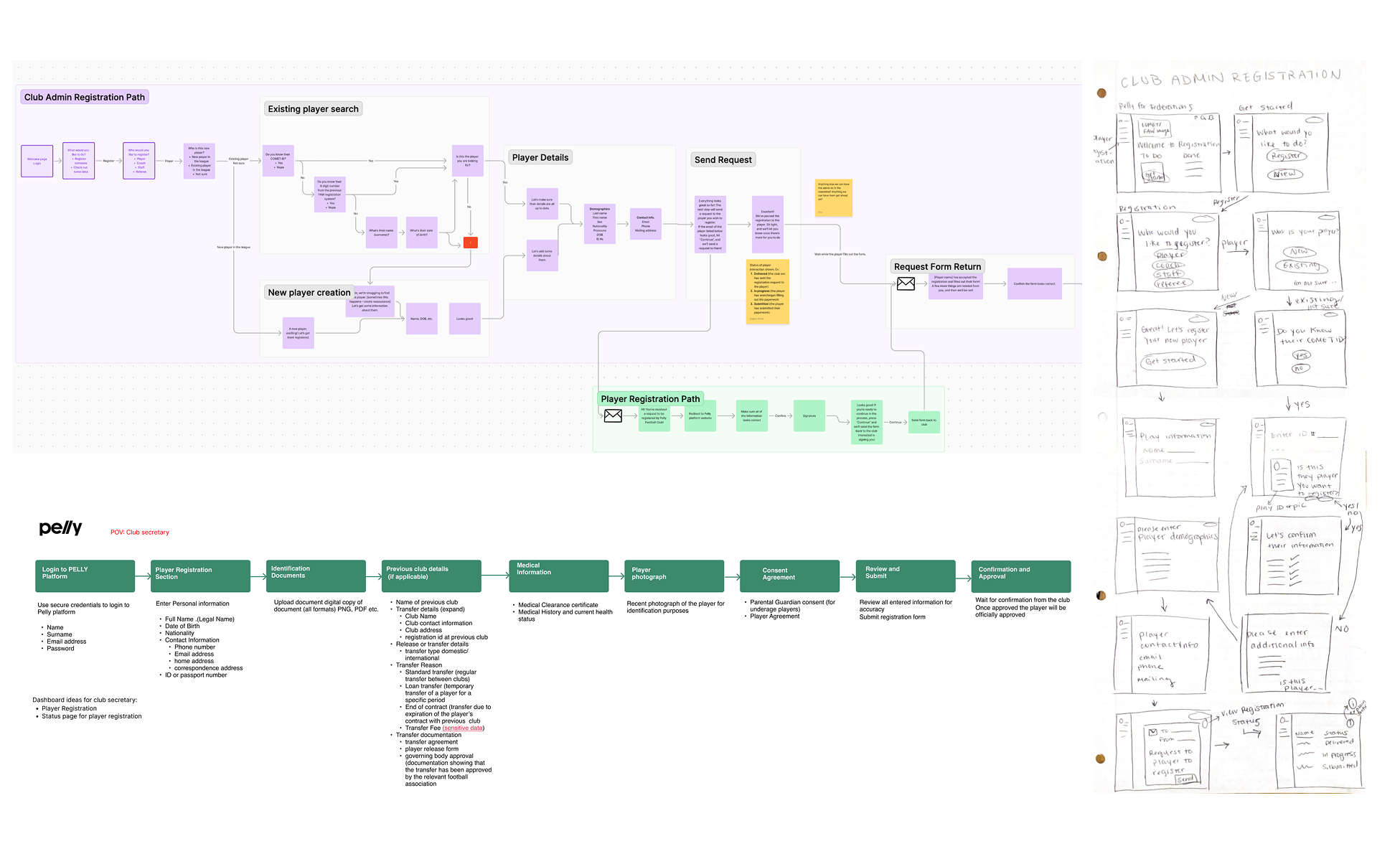
After the preliminary storyboarding and sketching, we created a detailed task analysis of everything the club secretary would see and do as they go through the player registration process. In the task analysis shown below, the central white boxes are the main frames that users will go through. The purple boxes indicate what the club secretary should see on each screen. The purple words are the actions that the user will need to do and the black italicized text indicates what the software will be doing at that stage.

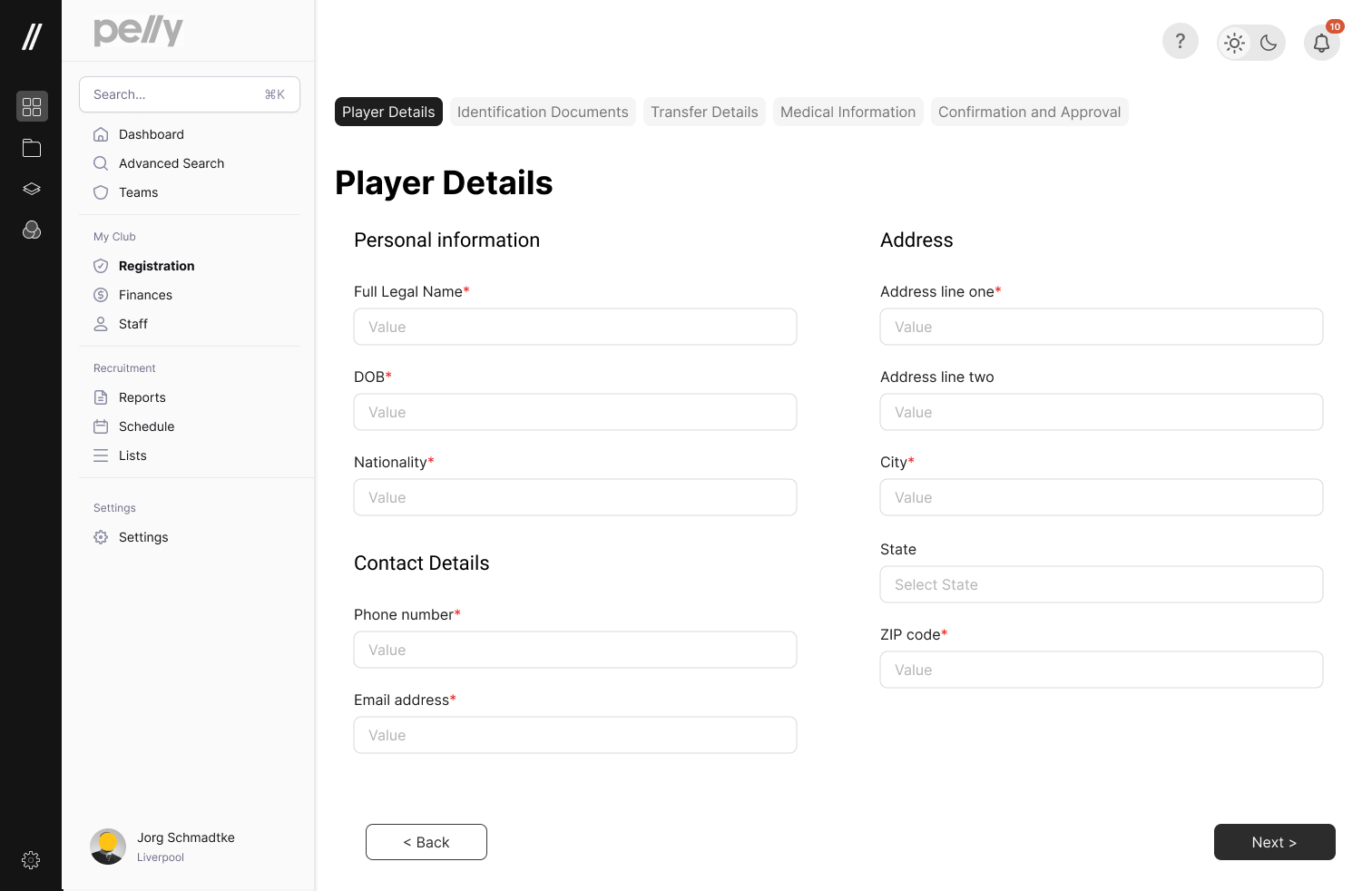
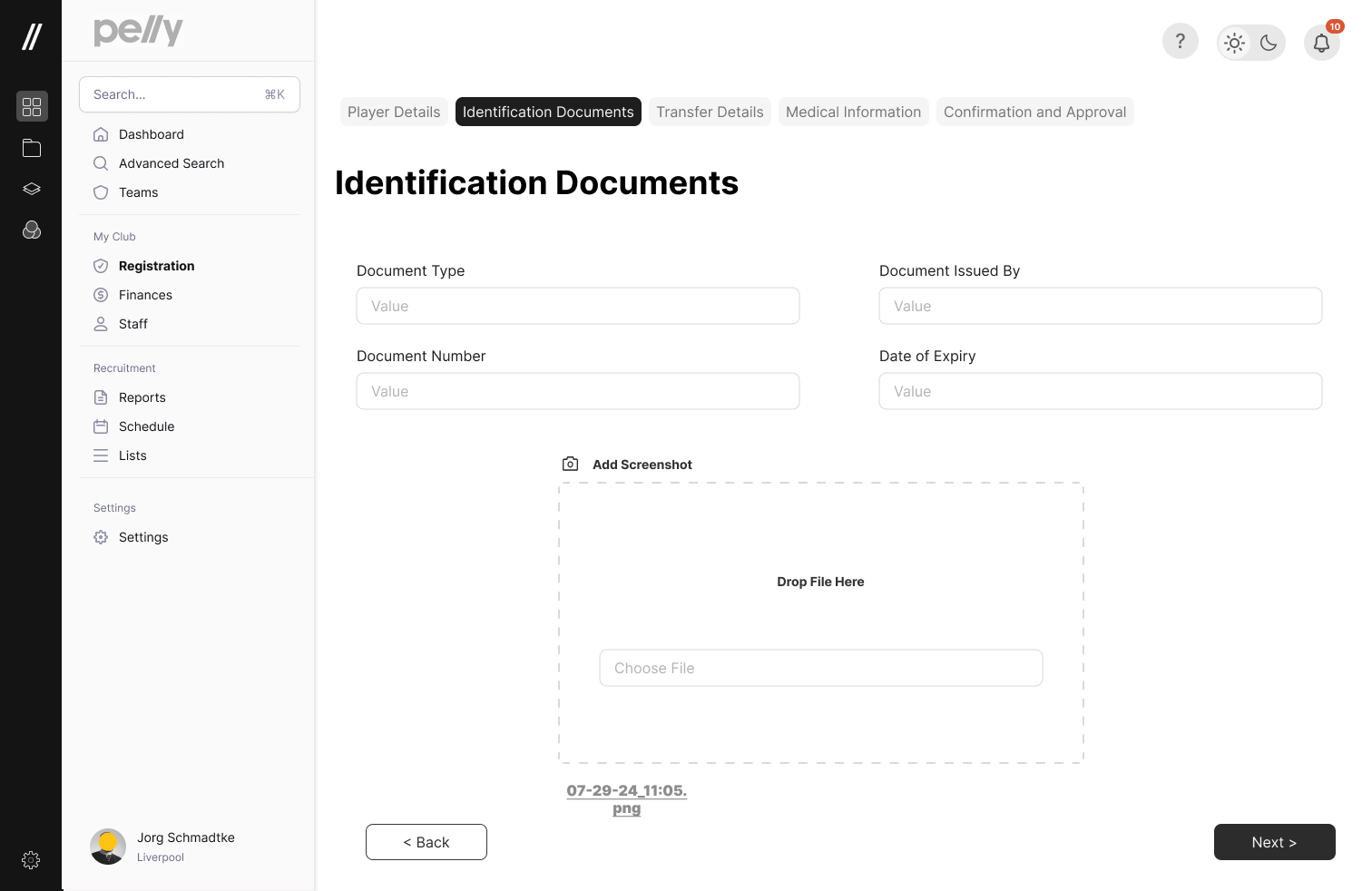
The main goal was to create a player registration flow to be used by Club Secretaries registering new or transferred players. Throughout this process, we focused on ensuring that the design includes:
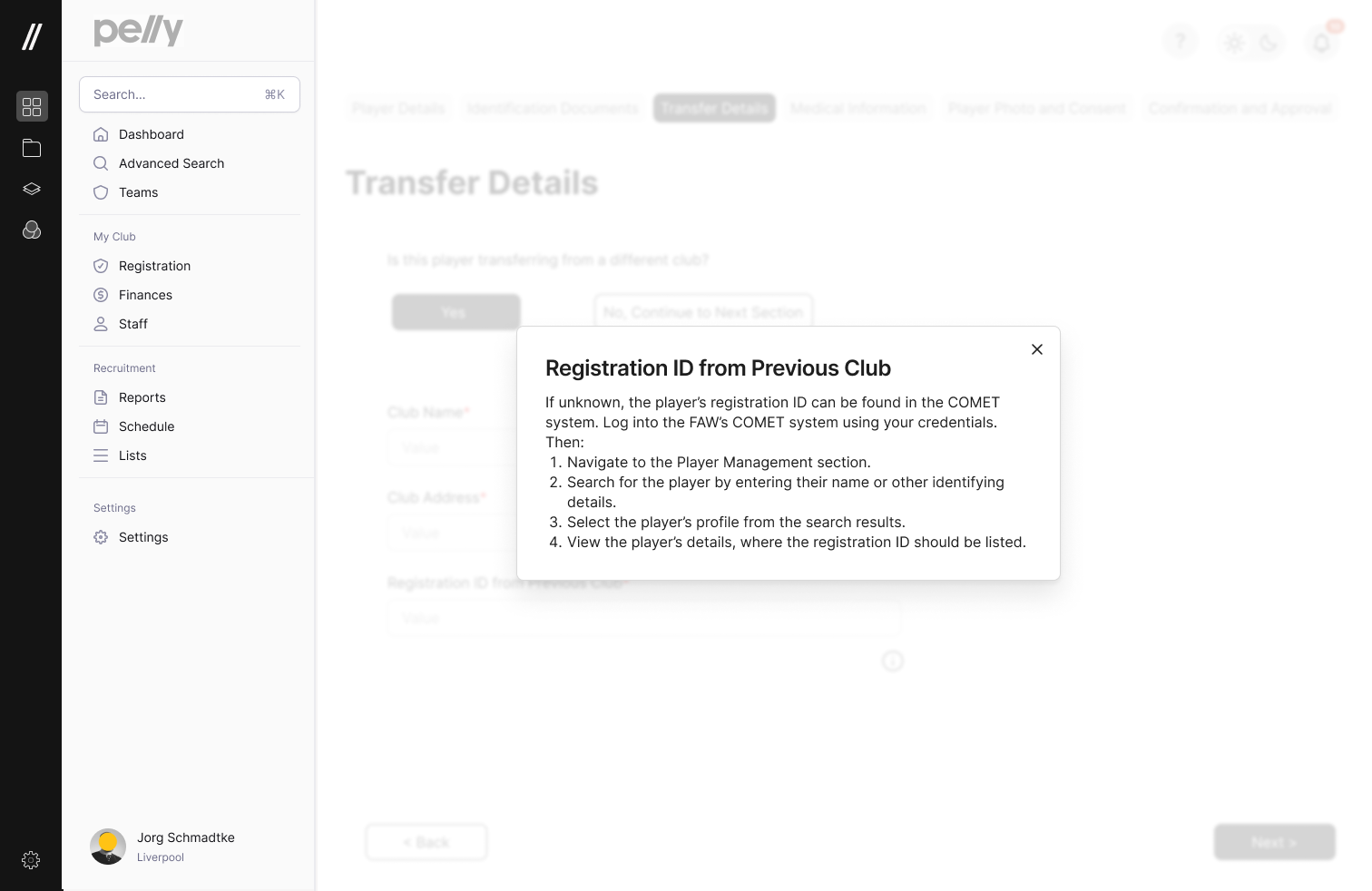
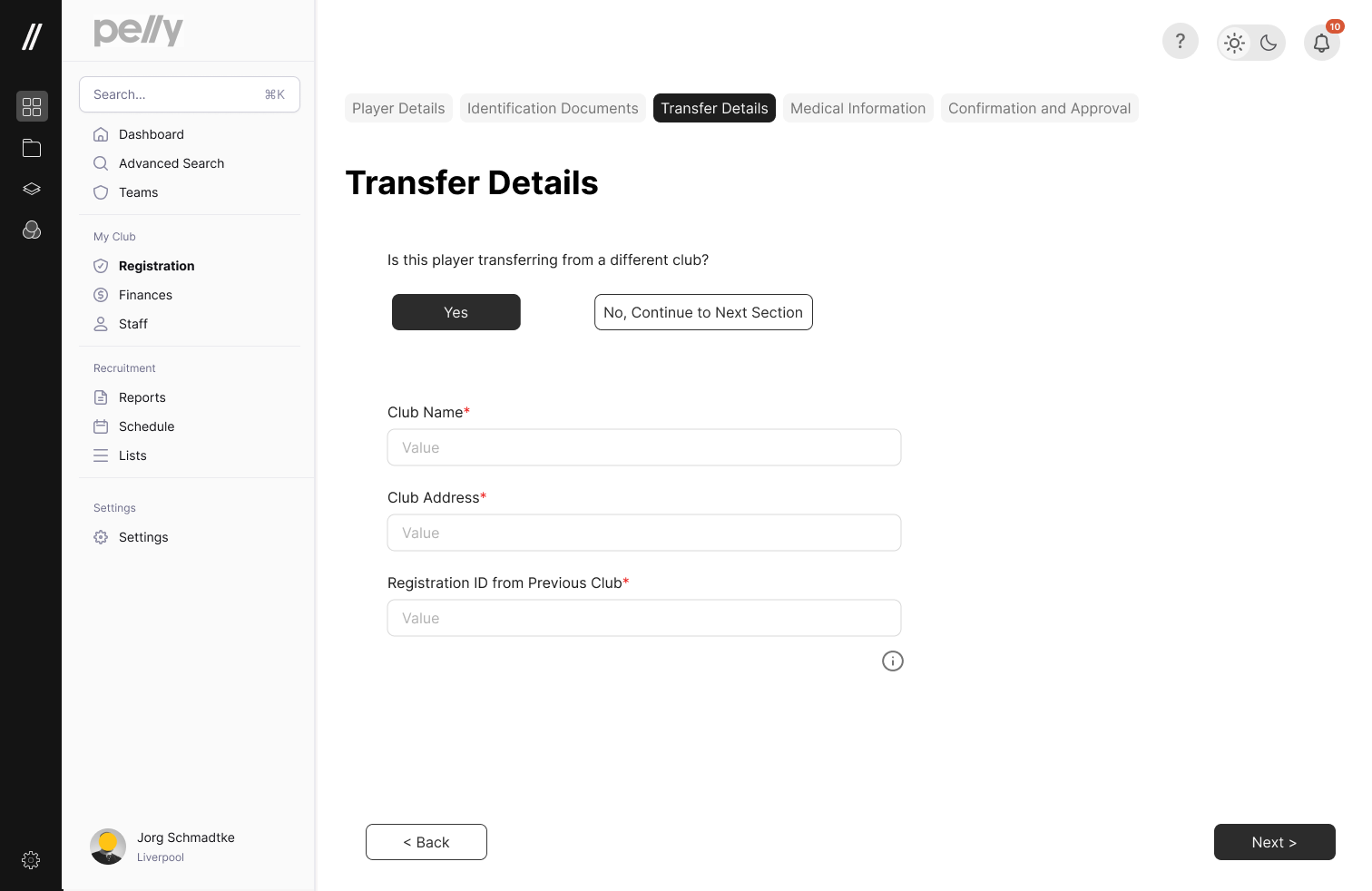
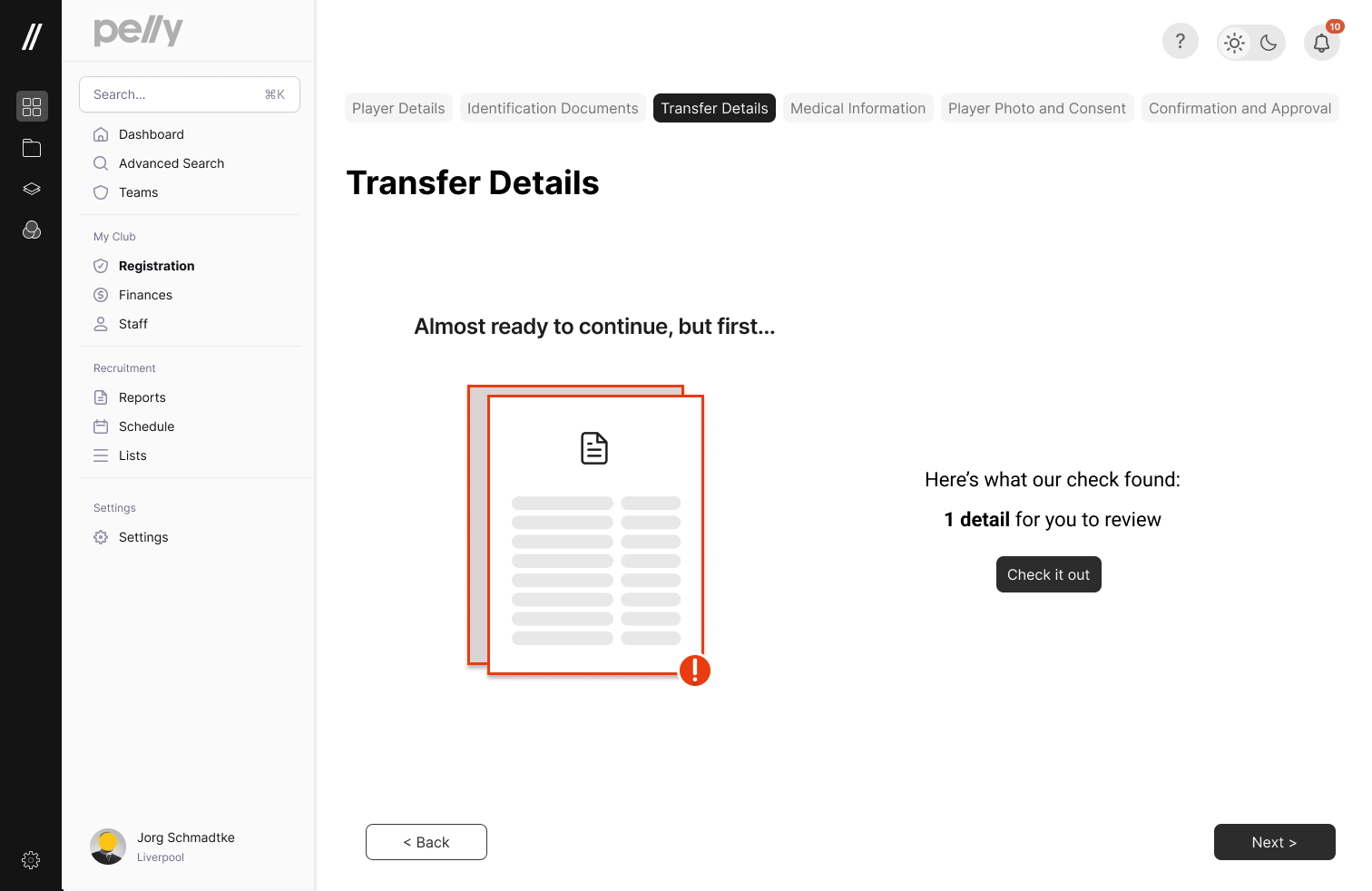
- Real time monitoring for compliance and error prevention. Our design includes regular checks of information so that the Club Secretary can be sure that all of the information is being input correctly.
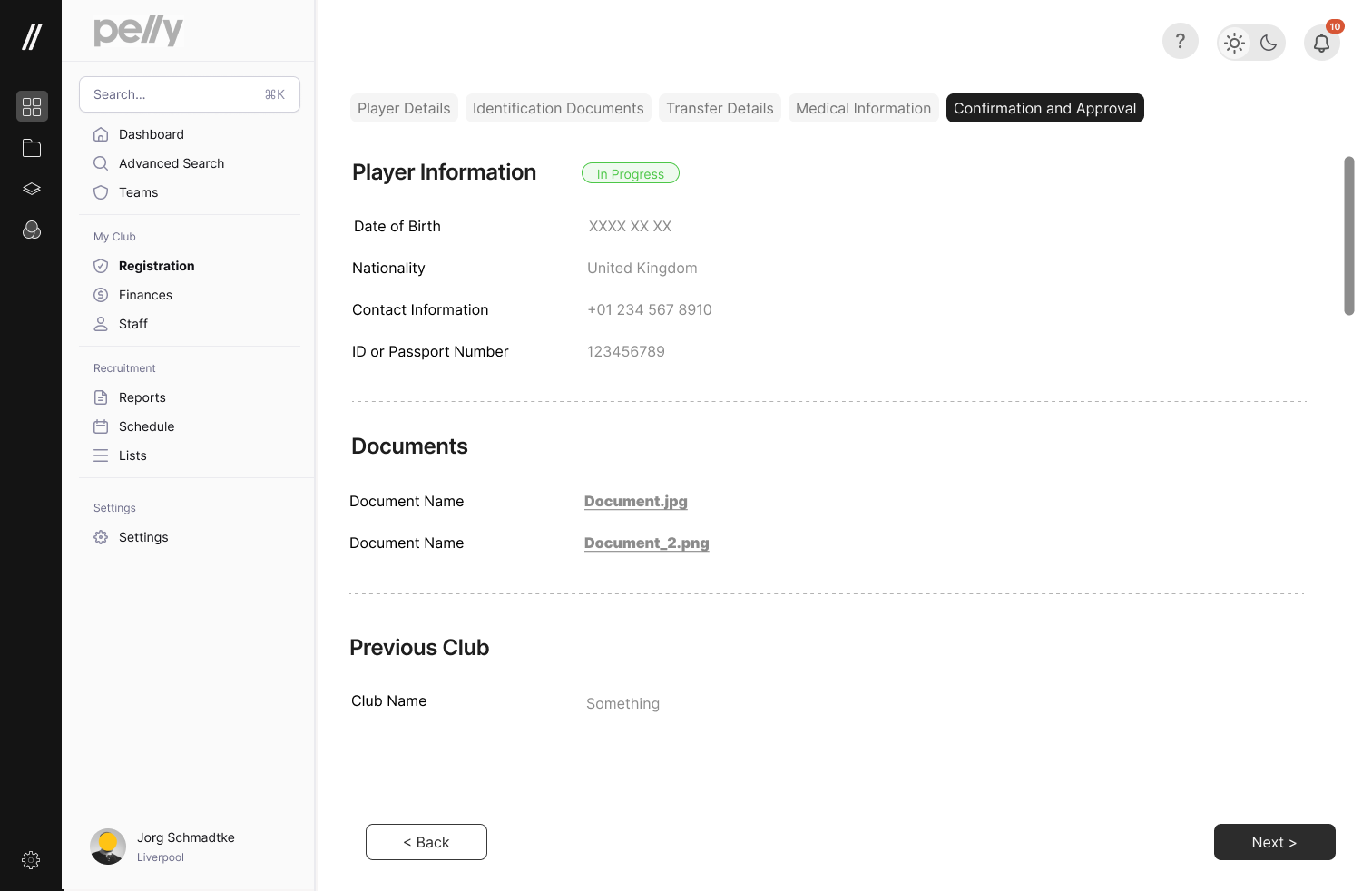
- High level summaries, so we included a design for a review page so that the user can review all of the information before submitting it.
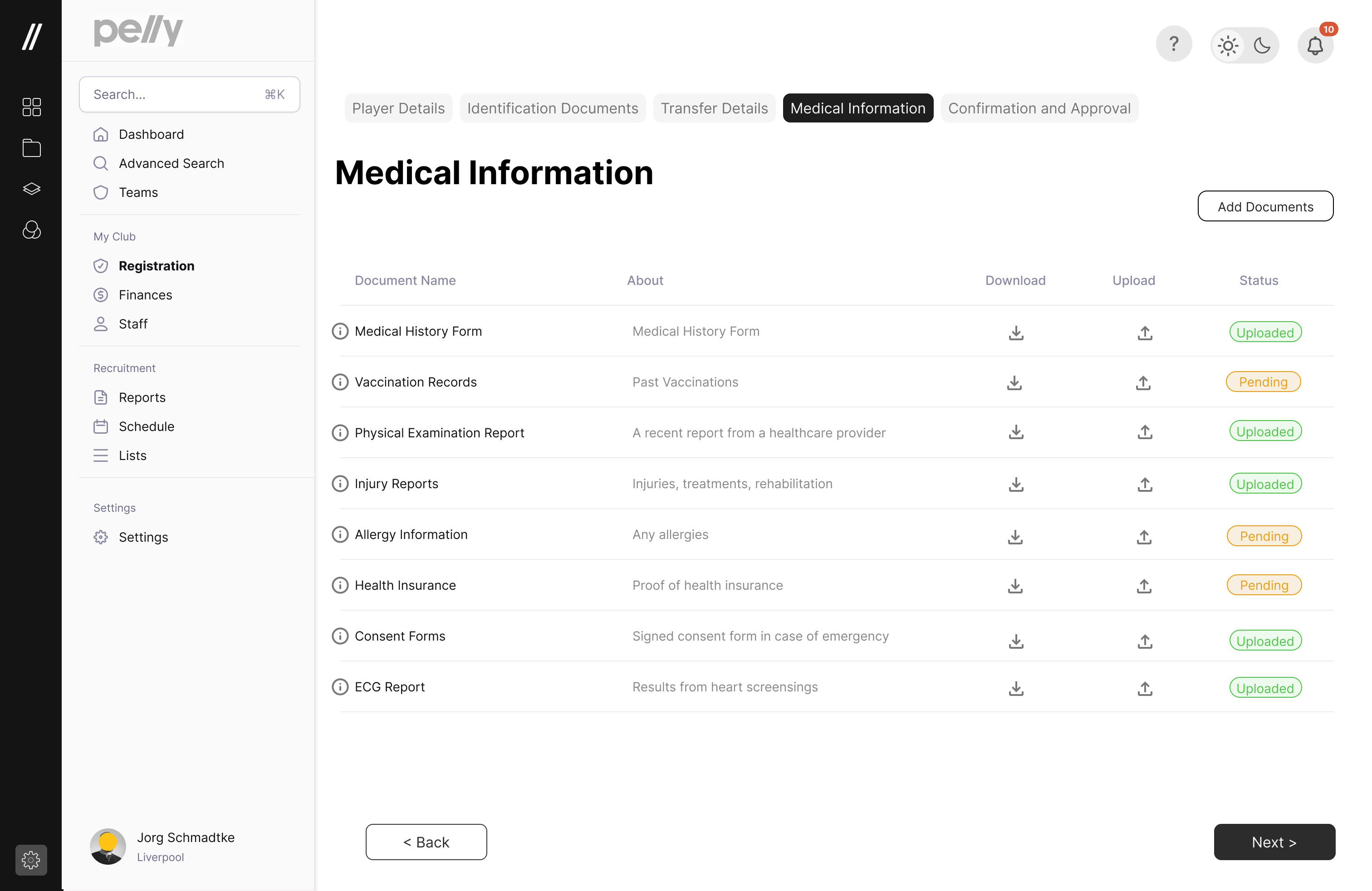
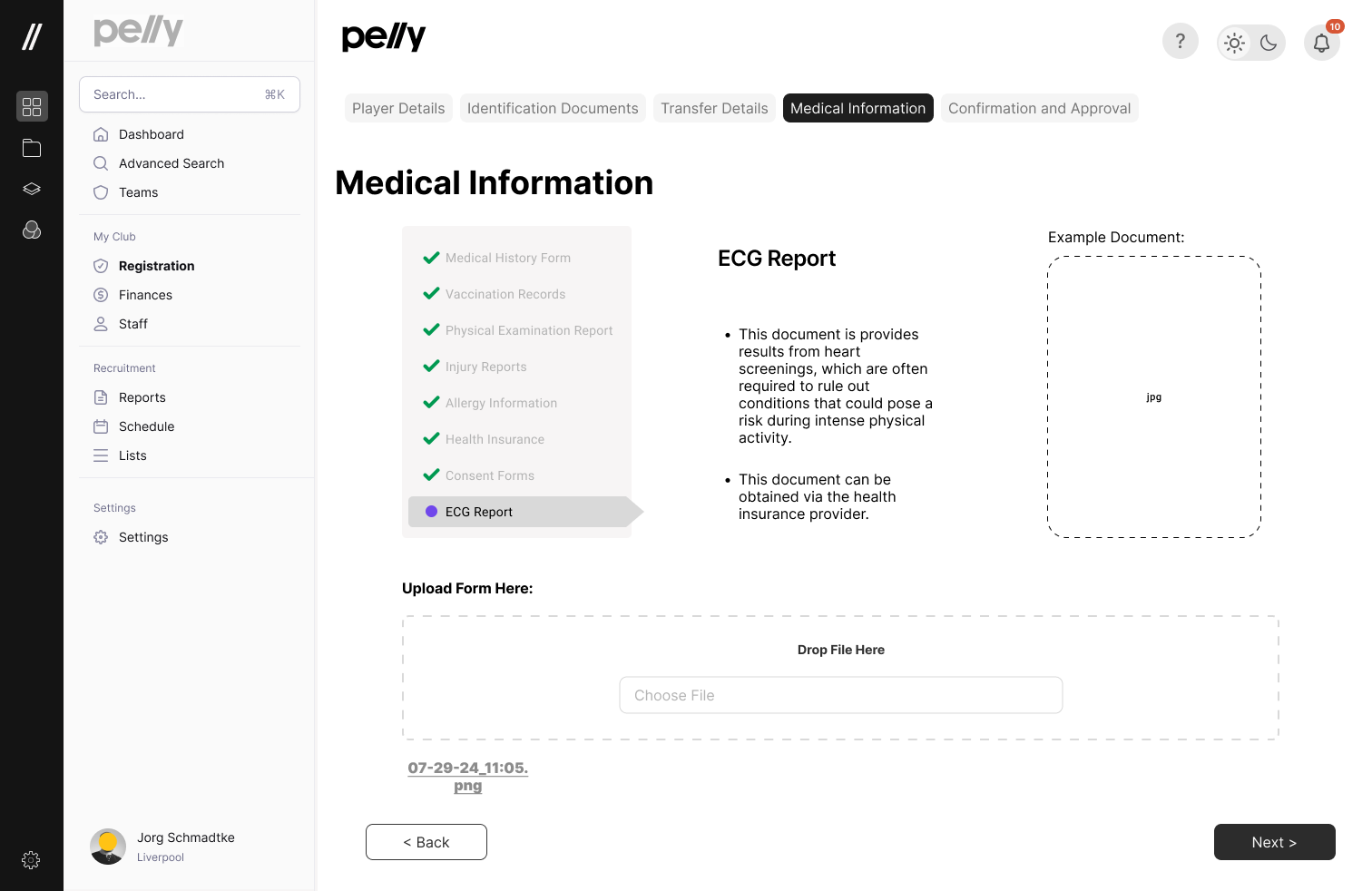
- A centralised data management platform for easy access and retrieval of essential documents, we envisioned how this system would interact with the player portal. Players will be able to upload their required documents to Pelly so that Club Secretaries have direct access to them, when necessary.
The goal of the first round of testing was to showcase our initial design to the Pelly team and collect their feedback before moving on to testing with primary users. Our main participant in this study was one of Pelly’s Co-Founders.
We conducted a usability interview using a medium-fidelity prototype developed in Figma. The participant was asked to click through the prototype while narrating their thoughts. Key questions included:
- What was the first thing your eyes were drawn to on this screen?
- Is there any information missing from here that you would need?
- How would you get to the dashboard from here?
The feedback from this session was extremely useful. We learned that:
- the “New Player Registration” button on the player registration screen needed to be relocated for better visibility.
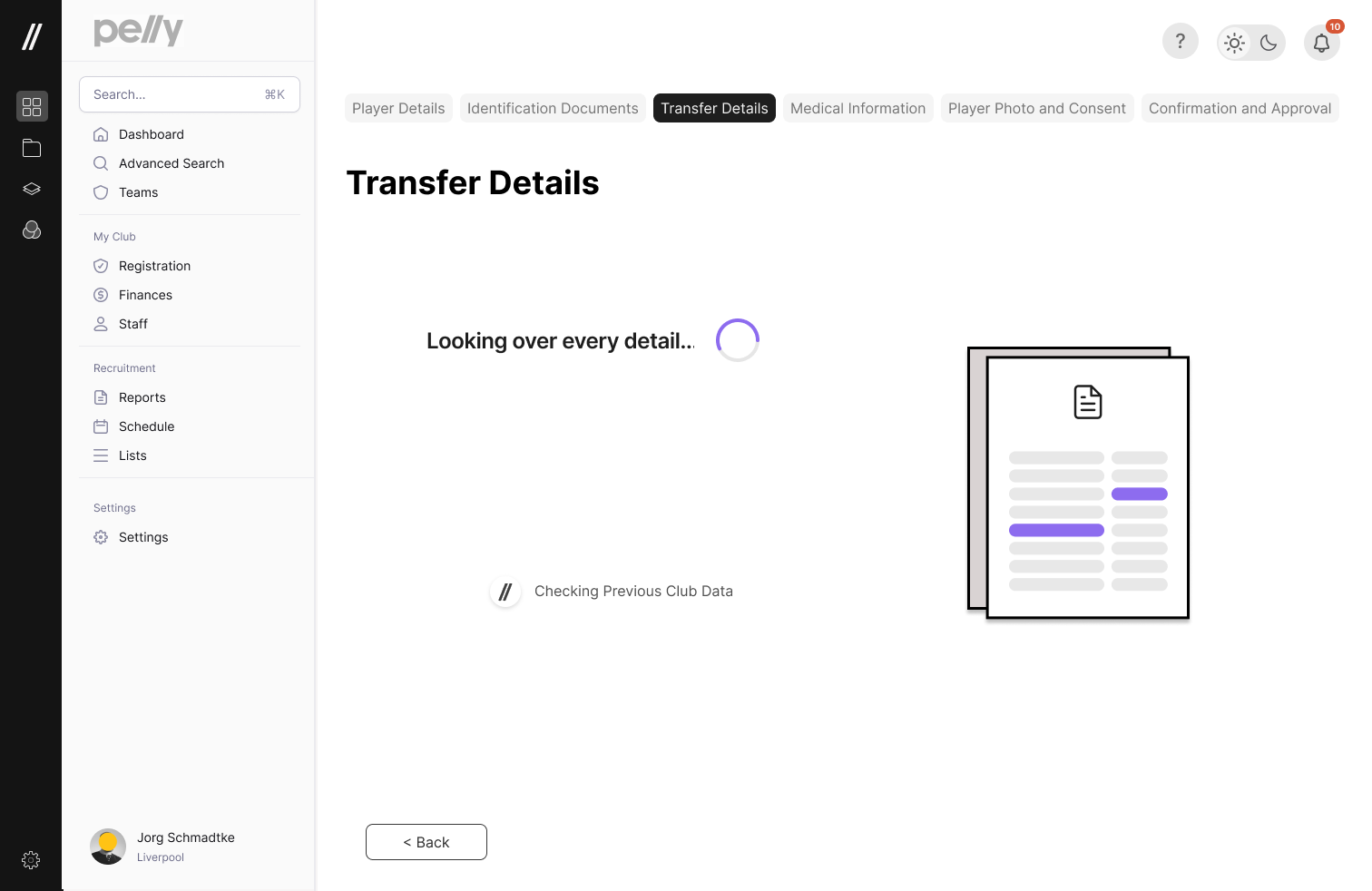
- there was confusion over the three dots on the loading page.
- there is a need for fields like player “Place of Birth” and “Passport Countries."
Based on the client’s critiques and evaluation feedback, we compiled a list of changes to be made. These ranged from small tweaks, such as adjusting button size and placement, to larger adjustments, such as redesigning certain workflows to enhance user experience. Some of the changes made were:
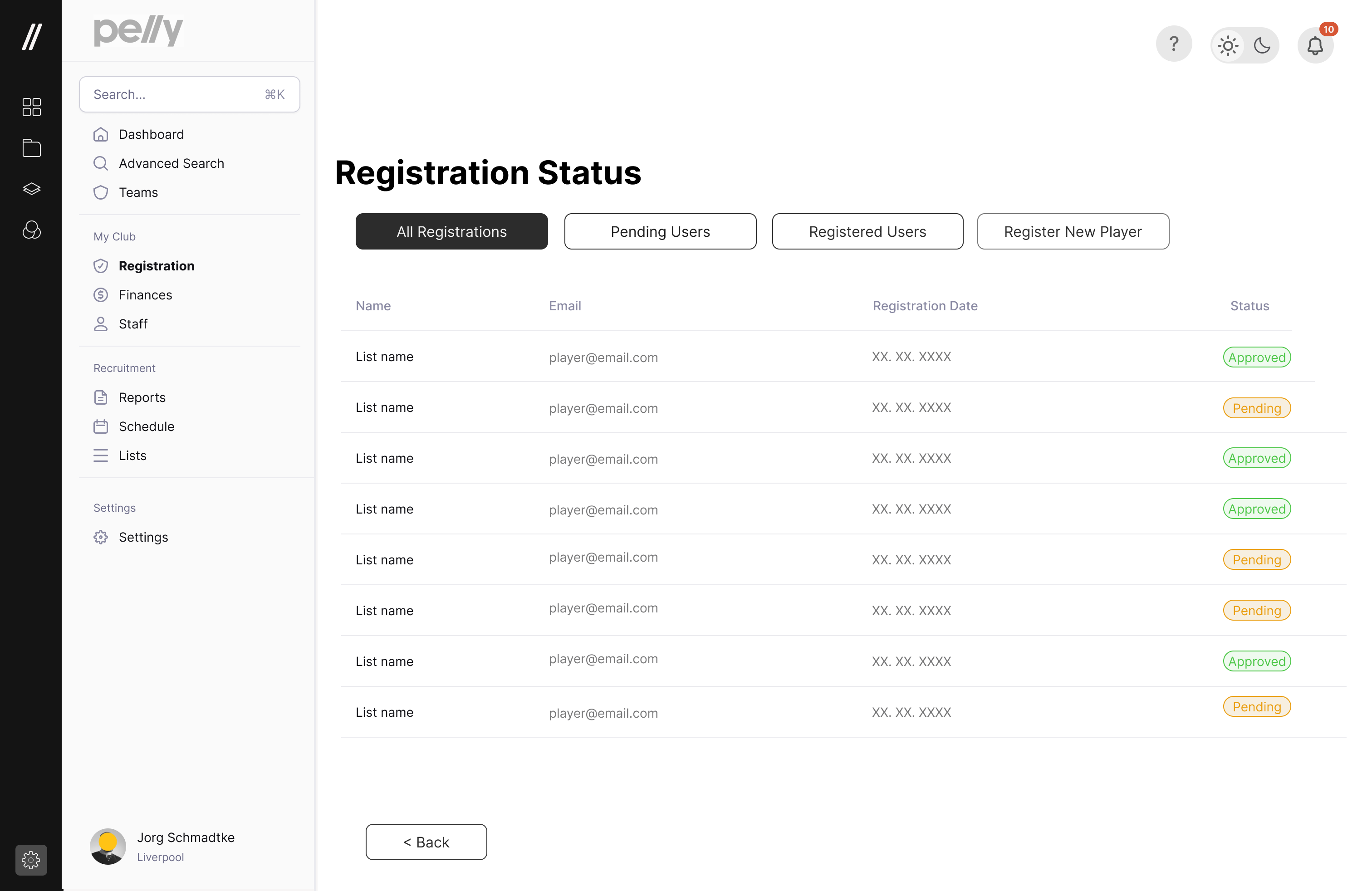
- Moved “Register New Player” button from bottom to top of the registration page to catch user’s eye quicker
- Added “Registration Date” column in Registration table. Helpful for the user to see when registrations were submitted.
- Removed dot icons on registration section transition pages which was used as an interactive element but determined to be confusing to the user.
- Removed player consent page. Determined it would potentially be easy for young players to forge e-signature, and agreements are already covered in contracts if required.